
This guide compares the 755nm vs 808nm vs 1064nm diode laser wavelengths to help clinics and aesthetic professionals understand their different applications. 755nm vs 808nm vs 1064nm diode laser wavelengths are commonly compared when choosing a professional diode laser system for hair removal.Diode laser technology is widely used for professional laser hair reduction, but not all diode laser wavelengths work in exactly the same way. The three wavelengths most commonly discussed in advanced multi-wavelength diode laser systems are 755nm, 808nm, and 1064nm.
Each wavelength has different characteristics, including how deeply the laser energy can penetrate and how it interacts with melanin in the hair and skin. This means that the most suitable wavelength may depend on factors such as skin tone, hair characteristics, treatment area, and the specific laser system being used.
In this guide, we compare 755nm vs 808nm vs 1064nm, explain their commonly discussed applications, and explore why triple-wavelength diode laser systems have become a popular option for clinics looking for greater treatment flexibility. Clinics looking for a versatile triple-wavelength diode laser machine may prefer a system that combines 755nm, 808nm, and 1064nm.
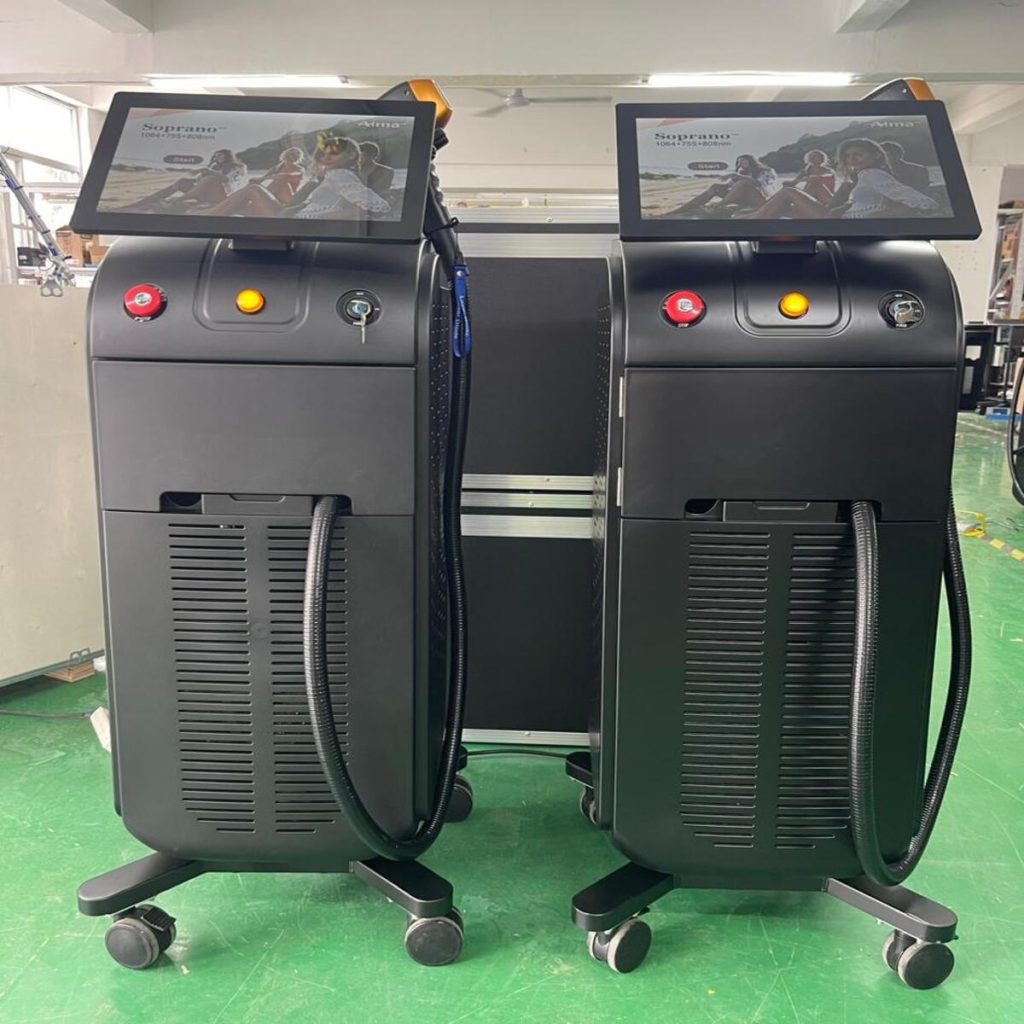
Table of Contents
Understanding Diode Laser Wavelengths
The wavelength of a laser is measured in nanometres (nm). In laser hair reduction systems, the selected wavelength affects how laser energy interacts with melanin and how deeply the energy can penetrate into the skin.
The three wavelengths commonly used in advanced triple-wavelength diode laser systems are:
755nm
Often associated with more superficial penetration and strong melanin absorption characteristics.
808nm
A versatile wavelength commonly used as a central or standard wavelength in many diode laser hair removal systems.
1064nm
A longer wavelength associated with deeper penetration and commonly considered useful when treating darker skin tones under appropriate professional settings.
It is important to understand that wavelength alone does not determine treatment results. Machine design, energy settings, pulse duration, cooling, spot size, skin assessment, hair characteristics, and operator technique are also important factors.
What Is a 755nm Diode Laser Wavelength?
The 755nm wavelength is known for its relatively strong interaction with melanin and is commonly discussed for treating finer or lighter hair characteristics, particularly when used on lighter skin tones.
Common characteristics of 755nm include:
- Stronger melanin absorption compared with longer wavelengths
- Relatively more superficial penetration
- Commonly considered suitable for lighter skin types
- May be useful for certain finer hair characteristics
- Can complement longer wavelengths in a multi-wavelength system
Because melanin is present in both the hair and skin, proper skin assessment and suitable machine settings are especially important.
What Is an 808nm Diode Laser Wavelength?
The 808nm wavelength is one of the most widely used wavelengths in diode laser hair reduction technology. It provides a balance between melanin absorption and penetration depth, which is why it is often considered a versatile option.
Common characteristics of 808nm include:
- Balanced penetration depth
- Widely used in diode laser systems
- Often used for a broad range of treatment areas
- Commonly selected for medium to coarse hair
- Can be used across a range of skin tones when appropriate parameters are selected
For many clinics, 808nm is considered the core wavelength in a conventional diode laser system.
What Is a 1064nm Diode Laser Wavelength?
The 1064nm wavelength has a longer wavelength and is associated with deeper penetration compared with 755nm and 808nm.
This wavelength is commonly discussed as particularly useful when treating darker skin tones, because of its different interaction with melanin and deeper penetration characteristics.
Common characteristics of 1064nm include:
- Longer wavelength
- Deeper penetration characteristics
- Lower melanin absorption compared with shorter wavelengths
- Commonly considered useful for darker skin tones when appropriate settings are used
- Can complement 755nm and 808nm in a triple-wavelength system
755nm vs 808nm vs 1064nm: Key Differences
| Feature | 755nm | 808nm | 1064nm |
|---|---|---|---|
| Penetration | Relatively more superficial | Balanced | Deeper |
| Melanin interaction | Higher | Moderate | Lower |
| Common skin association | Lighter skin tones | Broad range | Darker skin tones |
| Hair characteristics | Often finer hair | Medium to coarse hair | Deeper/coarser hair |
| Main advantage | Strong melanin interaction | Versatility | Deeper penetration |
| Role in triple-wavelength system | Adds flexibility | Core versatility | Supports darker skin treatments |
Note: This comparison is a general educational overview. Actual treatment suitability depends on the specific machine, skin assessment, hair characteristics, cooling system, treatment parameters, and the operator’s professional judgement.
Which Wavelength Is Commonly Used for Different Skin and Hair Types?
There is no single diode laser wavelength that can be described as universally “best” for every patient and every treatment situation.
In general:
755nm
May be preferred in certain situations involving lighter skin tones and finer hair characteristics.
808nm
Often considered a versatile option for a wide range of common treatment situations.
1064nm
May be particularly valuable when treating darker skin tones, depending on the professional assessment and selected treatment parameters.
The advantage of a professional multi-wavelength system is that clinics may have greater flexibility instead of relying on only one wavelength.
Why Are Multi-Wavelength Diode Laser Systems Useful?
A single-wavelength diode laser can be effective for certain treatment requirements. However, clinics treat patients with different skin tones, hair characteristics, and treatment areas. When comparing a 755nm vs 808nm vs 1064nm diode laser system, clinics should consider skin type, hair characteristics, treatment areas, and the flexibility required for different patients.
A triple-wavelength diode laser system combining 755nm, 808nm, and 1064nm offers greater versatility by bringing three commonly used wavelength characteristics into one platform. A Soprano Titanium triple-wavelength diode laser system combines 755nm, 808nm, and 1064nm to provide greater treatment flexibility.
Potential advantages include:
- Greater flexibility for different skin tones
- Better adaptability for different hair characteristics
- Ability to treat multiple body areas
- Combination of different penetration characteristics
- A more versatile machine for clinics serving a diverse patient population
This does not mean that three wavelengths automatically guarantee better results. The quality of the machine, cooling technology, correct parameters, maintenance, and operator expertise remain extremely important.
Is One Wavelength Better Than the Others?
The answer is not necessarily. The best wavelength depends on the patient, skin characteristics, hair characteristics, treatment area, and the capabilities of the laser system.
A 755nm wavelength may be useful in situations where stronger melanin absorption is desirable, while 808nm offers a versatile balance for many diode laser applications. The 1064nm wavelength provides deeper penetration characteristics and is commonly considered valuable for darker skin tones.
For this reason, many professional clinics prefer a multi-wavelength diode laser system that provides greater flexibility rather than relying on a single wavelength for every patient.
Introducing the Soprano Titanium Triple-Wavelength Diode Laser
For clinics in Pakistan looking for a versatile professional diode laser platform, a triple-wavelength system combining 755nm, 808nm, and 1064nm can provide greater flexibility for different treatment requirements.
The Soprano Titanium Triple-Wavelength Diode Laser Machine available through Dermionic Technologies is designed to provide a combination of these three wavelengths in one system. This allows clinics to consider different wavelength characteristics when planning treatments for patients with varying skin tones, hair types, and treatment areas.
When selecting a diode laser machine, clinics should also consider factors beyond wavelength, including cooling technology, handpiece design, machine configuration, technical support, installation, operator guidance, maintenance, and availability of spare parts.
Choosing the Right Diode Laser Machine
When purchasing a professional diode laser machine, do not compare machines based only on the number of wavelengths.
Consider:
1. Wavelength Configuration
Does the machine provide the wavelength options your clinic requires?
2. Cooling Technology
A reliable cooling system is important for treatment comfort and machine operation.
3. Handpiece Design and Spot Size
Different handpiece configurations may affect treatment speed and usability.
4. Technical Support
Ask whether installation, operator guidance, troubleshooting, and after-sales support are available.
5. Spare Parts and Maintenance
Long-term service availability can be an important factor when purchasing professional aesthetic equipment.
6. Machine Supplier
Choose a supplier that can provide complete product information and reliable support.
For general information about laser hair removal, skin considerations, and professional treatment guidance, clinics and patients can refer to the American Academy of Dermatology.
Looking for a Triple-Wavelength Diode Laser Machine in Pakistan?
If you are comparing 755nm vs 808nm vs 1064nm diode laser technology and looking for a professional multi-wavelength system for your clinic, Dermionic Technologies can provide information about available machine configurations, specifications, installation, and technical support. When comparing 755nm vs 808nm vs 1064nm diode laser technology, the best choice depends on the patient’s skin type, hair characteristics, and treatment requirements.
FAQs
Frequently Asked Questions
Which is better: 755nm, 808nm, or 1064nm?
No single wavelength is best for every situation. The most suitable option depends on skin tone, hair characteristics, treatment area, and the professional assessment. A triple-wavelength system can provide greater flexibility.
What is the 808nm diode laser used for?
808nm is commonly used as a versatile wavelength in diode laser hair reduction systems and is often considered suitable for a broad range of treatment situations when appropriate parameters are selected.
Is 1064nm better for darker skin?
1064nm is commonly associated with deeper penetration and lower melanin absorption compared with shorter wavelengths. It is often considered useful for darker skin tones when appropriate professional settings are used.
What is the advantage of a triple-wavelength diode laser?
A triple-wavelength system combines 755nm, 808nm, and 1064nm characteristics in one machine, providing greater flexibility for clinics treating patients with different skin and hair characteristics.
Does a triple-wavelength diode laser mean three wavelengths are always used together?
This depends on the specific machine design and treatment protocol. Clinics should follow the manufacturer’s instructions and appropriate professional treatment guidelines.Overall, choosing between a 755nm vs 808nm vs 1064nm diode laser depends on the clinic’s treatment needs, patient skin types, and the advantages offered by a multi-wavelength platform.
Explore the Soprano Titanium diode laser machine in Pakistan for complete specifications and current availability.

Sohail Sarwar is an Electrical Engineer specializing in Electronics, and CEO at Dermionic Technologies. His engineering background gives him a hands-on, technical understanding of how aesthetic laser systems, diode technology, and RF-based devices actually work under the hood — from power delivery and calibration to long-term reliability. He writes to help clinics in Pakistan make informed, technically sound decisions when investing in aesthetic and medical equipment. Connect with him on LinkedIn.