
Pico Laser Treatment: Benefits, Side Effects and Results
Pico laser treatment is one of the most talked-about treatments in aesthetic clinics in Pakistan, especially for tattoo removal, pigmentation and melasma. This guide explains what a pico laser is, its benefits, possible side effects and what results to expect.
I’m Sohail Sarwar, an electrical engineer and CEO of Dermionic Technologies. We supply and service aesthetic lasers in Pakistan, including pico lasers. The first part of this guide is for anyone curious about the treatment; the last part is for clinic owners thinking of offering it.
What Is a Pico Laser?
A pico laser, or picosecond laser, fires extremely short pulses of light, measured in picoseconds (trillionths of a second). Most pico lasers used in clinics are Nd:YAG lasers working at 1064nm, often with a 532nm wavelength as well.
Because each pulse is so short, the energy breaks pigment into very fine particles mainly through a pressure (photoacoustic) effect rather than heat. The body then clears these particles naturally over the following weeks. Older nanosecond lasers, such as Q-switched Nd:YAG lasers, work in a similar way but with longer pulses that rely more on heat.
Pico Laser Benefits
- Tattoo removal: breaks ink into smaller particles, which can mean fewer sessions than older lasers for many tattoos, especially dark inks.
- Pigmentation and melasma: treats freckles, sun spots and uneven tone, often with low-energy “toning” sessions.
- Skin rejuvenation: with special handpieces, it can improve texture, fine lines and pore appearance.
- Acne scars: fractional pico treatments can help soften some types of scarring.
- Less heat in the skin: compared with older lasers, which can lower the risk of heat-related side effects when settings are correct.
- Short downtime: most people return to normal activities within a day or two.
What Happens During Pico Laser Treatment?
A session usually starts with cleansing the skin, and sometimes a numbing cream for tattoos or sensitive areas. Everyone in the room wears protective eyewear. The operator passes the handpiece over the area; patients often describe the feeling as quick snaps on the skin.
Treatment time depends on the area. A small pigmentation patch may take a few minutes, while a large tattoo takes longer. Most conditions need several sessions spaced weeks apart, and the exact number depends on the condition, skin type and, for tattoos, the ink colour and depth.
Pico Laser Side Effects
Pico laser treatment is generally well tolerated when performed by a trained operator, but like any laser it can have side effects. Common, temporary effects include:
- Redness and mild swelling for a few hours to a few days
- Warmth or a sunburn-like feeling
- Small scabs or pinpoint bleeding, mainly after tattoo removal
- Temporary darkening or lightening of the treated skin
Less common risks include blistering, longer-lasting pigment changes and, rarely, scarring. These are more likely with incorrect settings, on recently tanned skin, or without proper aftercare. Darker skin types, which are common in Pakistan, need conservative settings and strict sun protection.
Anyone who is pregnant, has an active skin infection, a history of keloid scarring or is taking photosensitising medicine should discuss this with a doctor before treatment.
Aftercare After Pico Laser Treatment
- Use a broad-spectrum sunscreen every day and avoid strong sun exposure
- Keep the area clean and moisturised; do not pick scabs
- Avoid harsh exfoliants, retinoids and hot saunas for a few days, unless your doctor advises otherwise
- Follow the clinic’s specific instructions after tattoo removal
Pico Laser Before and After: What Results to Expect
Results of pico laser treatment build gradually over a course of sessions. Pigmentation often lightens after the first one or two sessions, while tattoos fade step by step as the body clears the ink. Melasma can improve but may return, so maintenance and sun protection are important.
When choosing a clinic, ask to see real before-and-after photos of their own patients with a similar skin type and condition. Be cautious of anyone promising guaranteed results in one session.
Pico Laser vs Q-Switched Laser
| Pico laser | Q-switched Nd:YAG | |
|---|---|---|
| Pulse length | Picoseconds (much shorter) | Nanoseconds |
| Main effect | Mostly photoacoustic (pressure) | More photothermal (heat) |
| Tattoo removal | Often fewer sessions for many tattoos | Effective, usually more sessions |
| Machine cost | Higher | Lower |
Both are useful. Q-switched lasers remain a cost-effective option for many pigmentation and tattoo treatments, while pico lasers are the newer, faster option many clinics now prefer.
For Clinic Owners: Is a Pico Laser Worth It?
Patients in Pakistan actively search for pico laser treatment, which makes it an easy service to market. Tattoo removal and pigmentation are repeat-session treatments, so one machine can produce steady monthly income.
When buying, check that the machine is a true picosecond laser, which wavelengths and handpieces are included, the warranty, and whether training and local service are provided. Operator training is especially important for darker skin types.
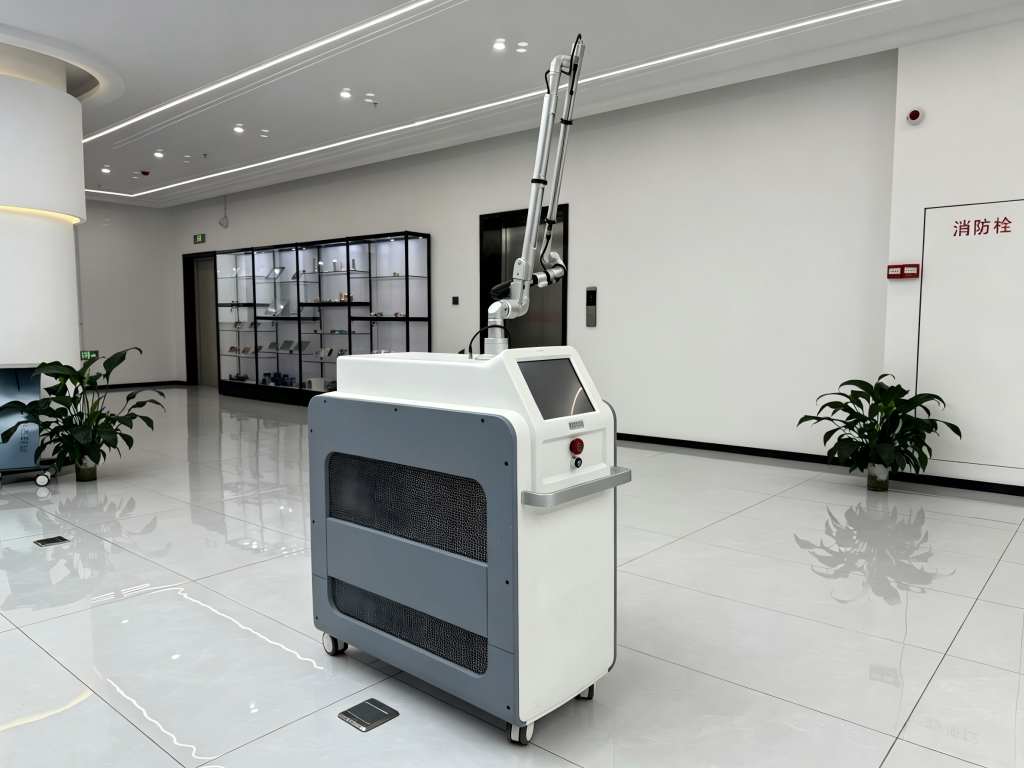
Dermionic Technologies supplies a pico laser machine (picosecond Nd:YAG) for PKR 1,650,000, with installation, operator training and a 1-year warranty. If your clinic focuses on scars and skin resurfacing instead, see our guide to the CO2 laser machine for skin.
Frequently Asked Questions
What is pico laser used for?
Mainly tattoo removal, pigmentation, melasma, freckles and sun spots, and skin rejuvenation.
Is pico laser painful?
Most people feel quick snapping sensations. Numbing cream is often used for tattoo removal and sensitive areas.
How many pico laser sessions are needed?
It depends on the condition. Pigmentation may need a few sessions, while tattoos often need several sessions spaced weeks apart.
Is pico laser safe for Pakistani skin?
Yes, when performed by a trained operator using appropriate settings, with good sun protection before and after treatment.
What is the price of a pico laser machine in Pakistan?
At Dermionic, a pico laser machine costs PKR 1,650,000 (October 2026), with installation, training and a 1-year warranty. See machine details.

Sohail Sarwar is an Electrical Engineer specializing in Electronics, and CEO at Dermionic Technologies. His engineering background gives him a hands-on, technical understanding of how aesthetic laser systems, diode technology, and RF-based devices actually work under the hood — from power delivery and calibration to long-term reliability. He writes to help clinics in Pakistan make informed, technically sound decisions when investing in aesthetic and medical equipment. Connect with him on LinkedIn.