
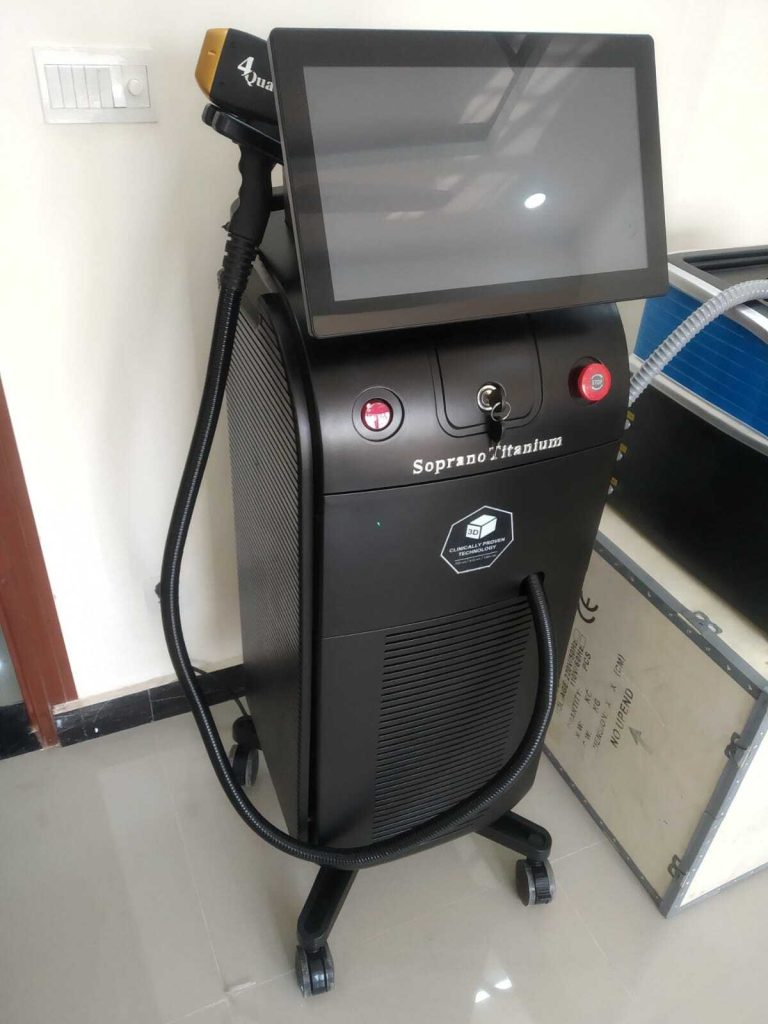
Diode laser hair removal is the most widely offered laser hair removal treatment in Pakistan. It is fast, comfortable for most patients and suitable for a wide range of skin types. This guide explains how it works, its benefits, how many sessions are needed, possible side effects and what results to expect.
I’m Sohail Sarwar, an electrical engineer and CEO of Dermionic Technologies. We supply, install and repair diode laser hair removal machines across Pakistan. The first part of this guide is for anyone considering the treatment; the last part is for clinic owners.
How Diode Laser Hair Removal Works
A diode laser sends light into the skin that is absorbed by melanin, the pigment in the hair. The light turns into heat inside the hair follicle and damages the parts that make new hair grow, while a cooling system protects the skin surface.
Most clinic diode lasers work at 808nm, and many modern machines combine three wavelengths (755nm, 808nm and 1064nm) in one handpiece so the operator can treat different hair and skin types. Our guide to 755nm vs 808nm vs 1064nm explains the difference in detail.
Benefits of Diode Laser Hair Removal
- Long-term hair reduction after a full course of sessions
- Suitable for many skin types, including the medium and darker skin common in Pakistan, when settings are correct
- Comfortable treatment, thanks to built-in contact cooling
- Fast sessions on large areas such as legs, arms and back
- No downtime: most people return to normal activities straight away
- Less ingrown hair and razor irritation than shaving or waxing
Which Areas Can Be Treated?
Almost any area with unwanted dark hair: the face and upper lip, underarms, arms, legs, back, chest and bikini line. Underarms and face are the most requested areas in Pakistani clinics, while full legs and backs take the longest.
How Many Sessions Are Needed?
Most people need around 6 to 8 sessions, spaced about 4 to 6 weeks apart. Hair grows in cycles and the laser only affects hairs in the active growth phase, so several sessions are needed to catch every follicle. Facial hair and hormonal hair often need more sessions and occasional maintenance.
Does Diode Laser Hair Removal Hurt?
Most people describe a warm, prickling or snapping sensation. Diode machines with good contact cooling and a gliding technique are usually more comfortable than older lasers, and many patients do not need numbing cream.
Diode Laser Hair Removal Side Effects
The treatment is generally safe in trained hands. Common, temporary effects include:
- Redness and small bumps around the follicles for a few hours
- Mild swelling or warmth
- Temporary darkening or lightening of the skin, especially on darker skin or after sun exposure
Rare risks include blisters and burns, usually caused by incorrect settings, a recent tan or poor cooling. Patients should avoid sun exposure before and after sessions, and tell the clinic about any medicines, pregnancy or skin conditions.
Before and Aftercare
- Shave the area a day before your session; do not wax or thread for several weeks before
- Avoid sun exposure and tanning before treatment
- Use sunscreen daily on treated areas
- Avoid hot baths, saunas and heavy exercise for a day after treatment
- Expect some treated hairs to shed over the following 1 to 3 weeks
Results: What to Expect
Hair becomes finer and less dense with each session. After a full course, most people see a large, long-lasting reduction, although a few hairs may grow back over time and need a touch-up session. Results are best on dark hair; very light, grey, red or blonde hair responds poorly to any laser.
Diode Laser vs Candela Alexandrite Laser
| Diode laser | Candela alexandrite (755nm) | |
|---|---|---|
| Skin types | Wide range, safer on darker skin | Best on light to medium skin |
| Comfort | Usually very comfortable | Cryogen cooling, quick snap |
| Fine or light hair | Good, especially with 755nm included | Very good |
| Machine cost | Lower | Higher |
For a full comparison, read Candela vs Soprano and our guide to Candela laser hair removal.
For Clinic Owners: Offering Diode Laser Hair Removal
Laser hair removal is one of the most requested treatments in Pakistan, and patients return for several sessions, which gives a clinic steady monthly income. A diode laser is usually the most practical first laser for a new clinic, because it treats a wide range of skin types at a lower investment than alexandrite systems.
When buying, check the wavelengths, cooling, handpiece quality, warranty and local after-sales support. Our diode laser buying guide covers these points step by step.
Dermionic Technologies supplies the Soprano Titanium 1600W triple-wavelength diode laser for Rs 1,200,000, with installation, operator training and a 1-year warranty.
Frequently Asked Questions
Is diode laser hair removal permanent?
It gives long-term hair reduction. Most people see a large, lasting reduction after a full course, with occasional touch-ups.
Is diode laser safe for dark skin?
Diode lasers, especially with an 808nm or 1064nm wavelength, are among the safer options for darker skin when the operator uses correct settings.
How many diode laser sessions do I need?
Usually 6 to 8 sessions, about 4 to 6 weeks apart, depending on the area and hair type.
Which is better, diode or Candela laser?
Neither is better for everyone. Diode suits a wider range of skin types and costs less; Candela alexandrite is very effective on lighter skin and finer hair.
What is the price of a diode laser machine in Pakistan?
At Dermionic, the Soprano Titanium 1600W diode laser costs Rs 1,200,000 (October 2026) with a 1-year warranty. See machine details.

Sohail Sarwar is an Electrical Engineer specializing in Electronics, and CEO at Dermionic Technologies. His engineering background gives him a hands-on, technical understanding of how aesthetic laser systems, diode technology, and RF-based devices actually work under the hood — from power delivery and calibration to long-term reliability. He writes to help clinics in Pakistan make informed, technically sound decisions when investing in aesthetic and medical equipment. Connect with him on LinkedIn.